Showing posts with label Laptops/Pc/Tablets. Show all posts

Friday, 3 April 2015

iPhone 6C With 4-Inch Display Unlikely to Launch in 2015

Apple may not debut its much-anticipated 4-inch iPhone model this year, while more details about the implementation of the expected Force Touch feature on the iPhone range have been tipped.


KGI analyst Ming-Chi Kuo contradicts recent rumours that suggested three new iPhone models were likely to launch this year - the iPhone 6S, iPhone 6S Plus, and iPhone 6C.

Kuo further added that the next-generation iPhone models featuring 4.7-inch and 5.5-inch displays will sport Force Touch technology that will work differently when compared to the Apple Watch, new MacBook and 13-inch Retina MacBook Pro.

9to5mac citing Kuo claims that the Force Touch technology on the iPhone 6S will sense "how much of a user's finger contacts the display." It will only detect a touch when the user "adequately" touches the screen, thus differentiating it from light tap. The report claims that the upcoming iPhones will feature dedicated sensor, which will be placed under the backlight, to accurately measure touch pressure. Kuo says Samsung uses a similar methodology for touch sensor placement on Galaxy Note phablet screens, though he adds that Apple's implementation will be more advanced.

Kuo speculates that addition of Force Touch will be a major upgrade from the last year's iPhone 6 and iPhone 6 Plus leading him to believe that Apple might call it 'iPhone 7'.

In the meanwhile, the Force Touch sensors are being tipped to only be made available on the iPhone 6S Plus, with a report out of China adding the sensors will costs two and half times as much as that on the Apple Watch due to its larger size.

An earlier report hinting Apple will launch three iPhones suggested that the iPhone 6S and iPhone 6S Plus will be incremental updates from last year's iPhone 6 and iPhone 6 Plus. The iPhone 6C on the other hand would be the cheaper variant of the handset that the Cupertino-based giant will launch to tap emerging markets, which also includes India. All three were said to launch in the second half of 2015.

Samsung Galaxy S6 review

Choose one word to describe the Samsung Galaxy S6. Gorgeous. Powerful. 

Anyway, the Galaxy S6 was redone from scratch and bids farewell to plastic. Glass and metal is a critically acclaimed combination. Another way of saying it is - depending on how upset you are with the missing card slot and sealed battery - they're copying Apple and Sony. Alright, memory, battery and waterproofing are easy things to get upset about, so let's see what the Samsung Galaxy S6 offers in exchange.
The new look is impressive and exciting and Samsung's trademark AMOLED is the perfect match. It's an immersive 5.1 incher of QHD resolution, for the amazing 577ppi - though "amazing" doesn't work for Samsung. They'll call it "the best ever" - and will be right. And that's just the beginning.

Wednesday, 28 January 2015

YotaPhone 2 review

It may look like the YotaPhone 2 has lost the element of surprise but the sequel is actually trying to please the users the original wowed - and get a bigger crowd interested. The first generation was unexpected and fascinating but high price and low awareness didn't help it get its message across.

Number 2 isn't going to be a bestseller either, not in its wildest dreams, but it does well to fix a lot of things that didn't quite work the first time around. Yota Devices announced the YotaPhone 2 almost a full year ago for it to only recently become available. And, of course, we couldn't miss the opportunity to review one of the most intriguing gadgets in the market.

On a first glance, the YotaPhone 2 looks just like a regular Android flagship - even a bit old-fashioned, as in curvy and not too slim. The specs mean business though: a gorgeous FullHD AMOLED display, 32GB of storage, LTE, a solidly-built body and buttery-smooth experience courtesy of a Snapdragon 800 chip.
However, your perception of it will change completely once you turn it around. The unique feature is the always-on e-Ink display mounted on the back, safe under a layer of curved Gorilla Glass 3.


Think of all the possibilities that the battery-efficient screen opens - a power-frugal, pocket-sized e-reader for those sunny days on the beach or those long commutes; instant access to your smartphone's most important features - notifications, the time, calls, messages and email, the web and your favorite contacts, and even games. An ever changing battery cover style for your phone too, if you will.

There is a lot to discover about the new YotaPhone 2 but before we proceed to the key features, we must say we really like the YotaPhone 2 concept. It managed to get us excited as few devices have - let's hope it's not just in it for the points for trying.

Key features

  • 5.0" 16M-color 1080p AMOLED touchscreen, 442ppi
  • Always-on 4.7" 16-level grayscale e-Ink display (540 x 960 px, 235ppi)
  • Corning Gorilla Glass 3 on both screens
  • Android OS v4.4.3 KitKat with Yota Apps
  • Quad-core Krait 400 CPU at 2.3GHz, 2GB of RAM, Adreno 330 GPU; Snapdragon 801 chipset
  • 8MP autofocus camera, LED flash; HDR, panorama; 1080p@30fps video capturing
  • 32GB of built-in storage (25GB user-accessible)
  • Cat. 4 LTE (150/50Mbps); Wi-Fi a/b/g/n/ac; Bluetooth 4.0; NFC; GPS/GLONASS/BeiDou; FM radio; microUSB (SlimPort)
  • 2,500mAh battery
  • Active noise cancellation with a dedicated mic

Main disadvantages

  • No high-end video recording (either 4K @ 30fps or FullHD @ 60fps)
  • No microSD card slot or higher storage capacity option available
  • Always resting on a screen regardless how you put it down and double the chance of breaking a screen if you drop it

The YotaPhone 2 wasn't meant to compete with the current crop of flagships in terms of productivity and value-added features. On a second thought though, the extra screen has more added value than most.

Anyway, it was obviously built with smooth performance in mind. The lack of 4K video recording or a microSD card slot are not that much of a problem and surely won't be tough to swallow having in mind the YotaPhone 2's unique skill and character.

Thursday, 8 January 2015

Selfie-centered Samsung Grand Max unveiled in Korea

Samsung's event at CES 2015 was lacking in smartphone flair, instead focusing on domestic appliances and what they called SUHD television. In South Korea though, they are launching the Galaxy Grand Max which is to hit local shelves on January 9 at KWR 319,000 ($290).

From the front the device is an unmistakable member of the family, so much so that it is becoming increasingly difficult to tell which exactly Galaxy this is. The back is what distinguishes it with yet another iteration of the faux leather concept around the otherwise familiar flash-camera-speaker layout.


The phone features a 5.25" display of 720p resolution in a slender 7.9mm body weighing in at 161g. Running the show is the decent Snapdragon 410 with its CPU clocked at 1.2GHz and a modem supporting LTE Cat 4. It is joined by 1.5GB of RAM and 16GB of built-in storage, as usual with a microSD slot for expansion. Power will be provided by a 2500mAh battery, which should be about adequate.

The main camera is a 13MP unit, but Samsung is marketing the Grand Max as a selfie device stressing the 120 degree wide angle lens of the 5MP front snapper. It also allows voice operation to let you focus on making funny faces instead of shutter release.

Thursday, 1 January 2015

Xiaomi Redmi 1s with dual-LTE set to launch on January 4

Xiaomi will launch a new version of its popular Redmi 1s smartphone this coming Sunday, on January 4. The device will hit the shelves soon after its unveiling.


Xiaomi teased there will be a big thing happened with tencent and today Xiaomi claimed in their Weibo that Xiaomiwill release a new product along with Tencent through QQ space  at 4th January and the phone will be on sale at January . The new product is the long waited new edition of Redmi 1s.

According to the specifications on TENNA, the new Dual 4G LTE Edition Redmi 1s will be powered with Qualcomm’s 64 bit Snapdragon 410, have 4.7 inch 720p display, 1GB RAM, 8GB ROM, 2 megapixel front facing camera and 8 megapixel back camera, 2200mAh battery, running Android 4.4 based MIUI 6.0. This new Redmi 1s supports GSM, WCDMA, TD LTE, and LTE FDD networks. It has 2 SIM card slots, and both of the SIM card slots supports 4G LTE.

According to TENNA’s picture, its weight is 134g and some improvements must have been done with the texture and the bezels are thinner than last edition of Redmi 1s, the screen is also like an OGS screen, everything are pretty much better. But there are already a lot of phones in the market with this kind of  specifications and with more and more new competitors like Dazen and Meizu, how much will this phone will be priced at?

Meanwhile, the next generation Xiaomi Mi smartphone was also leaked recently. According to the leak, the phone features extremely thin bezels. There will also be a black edition model
, which was revealed a day before. Moreover, it is said that the flagship will top end specifications like a 2K resolution display, 3GB RAM, 4G LTE support etc. Also, the screen size will be increased from 5-inches to 5.5-5.7 inches in the upcoming flagship.

Unfortunately, apart from the leaked images, there is nothing too concrete about the device. The Xiaomi Mi5 is yet to hit TENAA or crop up on any benchmark websites, so for now, let’s hope that Xiaomi has something exciting to show at CES 2015.

OnePlus One gets official Android 5.0 Lollipop alpha ROM

OnePlus has been quietly developing its own Android 5.0 Lollipop based ROM for the OnePlus One. Following the controversy with Cyanogen licensing in India, the company had announced that it will be providing an early build to customers, which will replace the Cyanogen OS on their devices.


The company has now released an alpha build of the ROM on its forums, and is available to download and flash right now.

The ROM looks pretty much identical to stock Android Lollipop on Nexus devices but with a few minor changes, such as the ability to have either onscreen or physical navigation buttons.

This is an alpha build so there definitely are bugs, many of which are listed on the forum and others no doubt you'll find while using it. There are also clear instructions on how to install the ROM and the things you need to keep in mind, so make sure you read everything properly and know what you're doing before you take the plunge.

Tuesday, 30 December 2014

4GB RAM smartphones and tablets are coming! Samsung ups its memory module game to 4GB LPDDR4, available early 2015

It's official, dear readers - we're entering the age of mobile devices that have as much random access memory as the average laptop nowadays! Samsung just announced it has begun mass production of the industry's first 4 Gigabyte LPDDR4 mobile DRAM modules for smartphones and tablets. They are built on the company's 20nm process technology and offer an input/output data rate of up to 3200Mbps (megabits per second), along with UHD video recording and playback, continuous shooting of high-res images over 20MP resolution, and up to 40% lower power consumption compared to LPDDR3 units. The power savings are eligible for all LPDDR4 modules, so 2GB and 3GB RAM devices are getting the goods too.


Samsung is already selling 2GB and 3GB LPDDR4 RAM modules to global application processor vendors and mobile device makers, which means tomorrow's smartphones and tabs will be treated to cutting-edge RAM memory. As for those 4GB chips, Samsung expects they will become market-ready in early 2015. So it looks like it's time to place the bets - is the 4GB module going in the Samsung Galaxy S6 or the Galaxy Note 5? Heck, why not both? 

Additionally, there's this interesting quote fom Samsung's VP of Memory sales & Marketing, Joo Sun Choi: "By initiating production of 20nm 8Gb LPDDR4, which is even faster than the DRAM for PCs and servers and consumes much less energy, we are contributing to the timely launch of UHD, large-screen flagship mobile devices." Are 4K smartphones coming already? To be honest, we believe tablets will be the first to utilize ultra high definition because it makes more sense - their displays are sufficiently larger. But if Samsung wants to cram such an ungodly amount of pixels on your 5-or 6-incher, who's there to stop it?

Monday, 29 December 2014

Samsung Galaxy Core Prime Now Officially Available at Rs. 9,700


Without an announcement, Samsung has quietly changed the 'not in stock' status of its new budget Galaxy Core Prime smartphone on the company's India e-store to 'in stock'. Priced at Rs. 9,700, the smartphone was listed earlier this month on the company store with no word on availability.


The Samsung Galaxy Core Prime was recently also made available to purchase by e-commerce sites at Rs. 9,275. The Android 4.4 KitKat-based smartphone features dual-SIM support, a 4.5-inch WVGA (480x800 pixels) PLS (plane-to-line switching) TFT display, and a 1.2GHz quad-core processor coupled with 1GB of RAM.

It comes with 8GB of inbuilt storage, and supports expandable storage via microSD card (up to 64GB). The Galaxy Core Prime is said to include a 5-megapixel autofocus rear camera, and a 2-megapixel front camera. There is a 2000mAh battery onboard. The connectivity options on the handset include Wi-Fi b/g/n, Wi-Fi Direct, Wi-Fi Hotspot, Bluetooth 4.0, GPS, and 3G.

The Galaxy Core Prime includes an accelerometer and proximity sensor, apart from measuring 130.8x67.9x8.8mm and sporting a matte body finish with metal sides. It is currently listed in three colour variants - Charcoal Grey, White, and Silver.

Last month, Samsung's dual-SIM variant of the metal-clad Galaxy A5 was listed on company's China website. Listed on Samsung's China website as the Galaxy A5 (SM-A5000), the smartphone came with dual Nano-SIM support, and packs the same specifications as the single-SIM Galaxy A5.

In the meanwhile, Samsung's much awaited but never officially confirmed first Tizen smartphone, the budget Z1, has been leaked in all its glory at a purported retail partners meet in Mumbai on Monday.

Expected to be priced at Rs. 5,700 (based on a report quoting a Samsung executive who also mentioned a January 18 launch date), the Samsung Z1 smartphone was seen to sport a 4-inch WVGA (480x800 pixels) display; a 1.2GHz dual core processor coupled with 1GB of RAM; a 3-megapixel rear camera; a 0.3-megapixel front camera with f/2.4 aperture; 4GB of inbuilt storage expandable via microSD card (up to 32GB), and a 1500mAh battery. Connectivity options are said to include 3G, Wi-Fi, and Bluetooth 4.0.


Buy at amazon.in @10,249/-

Videocon Infinium Z45 Nova With Quad-Core SoC Launched at Rs. 4,999

Videocon, soon after launching the Infinium Z50 Nova in India, has now unveiled the Infinium Z45 Nova. The smartphone has been priced at Rs. 4,999 and, much like the Infinium Z50 Nova, will be exclusively available via Flipkart.

The Android 4.4.2 KitKat-based Videocon Infinium Z45 Nova comes with dual-SIM (regular SIM + Micro-SIM) support. It features a 4.5-inch FWVGA (480x854 pixels) IPS display and offers a pixel density of 218ppi. The smartphone is powered by a 1.3GHz quad-core MediaTek (MT6582) processor alongside a Mali 400 MP2 GPU and 1GB of RAM. The smartphone includes 8GB of inbuilt storage that is expandable via microSD card (up to 32GB).

The smartphone sports a 5-megapixel autofocus rear camera with LED flash, while also housing a 0.3-megapixel front-facing camera. The Videocon Infinium Z45 Nova's rear camera features Panorama mode, HDR mode, face beauty, self timer, voice capture, smile shot, and BSI.

Connectivity options on the smartphone include Bluetooth 4.0, Wi-Fi, Micro-USB, GPRS/ EDGE, GPS/ A-GPS, and 3G. It packs a 1700mAh battery, measures 133.5x65x8.5mm, and weighs 131 grams. The Infinium Z45 Nova also includes sensors such as accelerometer, ambient light sensor, and proximity sensor.
The Videocon Infinium Z45 Nova is currently available on Flipkart and comes in two colour variants - Black and White.

Last week, the company launched its latest Android 4.4 KitKat-based smartphone, the Infinium Z50 Nova, priced at Rs. 5,999.

The dual-SIM (3G+2G) Videocon Infinium Z50 Nova runs Android 4.4.2 KitKat out-of-the-box. It features a 5-inch qHD (540x960 pixels) IPS display; a 1.3GHz quad-core (MediaTek MT6582); 1GB of RAM; an 8-megapixel autofocus camera with Sony Exmor R sensor and LED flash; a 2-megapixel front-facing camera; 8GB of built-in storage that is expandable via microSD card (up to 32GB), and a 1900mAh battery.

 Buy at Flipkart @ 4999/-


Sunday, 28 December 2014

Best Smartphones Under Rs. 15,000

Some of the high profile launches since our last roundup included the three Android One phones and the fingerprint sensor equipped Xolo Q2100, not to mention the Jolla Smartphone running the Sailfish OS and the entry-level Firefox OS phone, the Intex Cloud FX. If you're looking to buy a phone right now, then here are our top picks for smartphones under Rs. 15,000:

Best overall: Motorola Moto G (Gen 2)

The Moto G was one of the handsets responsible for creating the current interest in the under-Rs. 15,000 market, and the second generation of the device remains an excellent buy. The new Moto G  is a bit boring to look at, but does well in terms of its display, software, performance, battery life and camera, making it a really good pick.

 price in flipkart : 12,999/-

Best value for money: Asus ZenFone 5 (8GB)

Available at under Rs. 10,000, the Asus ZenFone 5 8GB model remains our value-for-money pick, since you get a phone with a great camera, decent performance and looks, at a price where the competing phones come with serious compromises. 


 price in flipkart : 9,999/-

Import database reveals Samsung Galaxy Tab 5 tablet on the way

Samsung has a Galaxy Tab 5 slate coming our way. Sporting the model number SM-T55, the upcoming tablet appeared in an Indian import/export database.


If the model number is anything to go by, Samsung Galaxy Tab 5 shapes up to be a minor upgrade over the model it is bound to replace. Announced back in April, Samsung Galaxy Tab 4 (SM-T530/SM-T535), totes Qualcomm Snapdragon 400 chipset, 10.1” 1280 x 800 display, and 1.5GB of RAM.

Samsung Galaxy Tab 5 is likely to pack 64-bit Qualcomm Snapdragon 410 SoC when it goes official. Android 5.0 Lollipop with TouchWiz 5.0 will be the OS out of the box.

Alongside the SM-T55, the import paperwork revealed another, budget-friendly Samsung slate – the SM-T116. Valued at roughly $100, the tablet is the likely successor of the Samsung Galaxy Tab 3 Lite.

Saturday, 27 December 2014

Nikon 1 AW1, Nikon 1 V3, Nikon 1 J4 Compact Cameras Launched in India

Nikon on Friday launched the Nikon 1 AW1, Nikon 1 V3, and Nikon 1 J4 compact cameras in India.

While the Nikon 1 AW1 comes with a 11-27.5mm F/3.5-5.6 lens kit at Rs. 39,950, the Nikon 1 V3 and Nikon 1 J4 come with 1 NIKKOR VR 10-30mm f/3.5-5.6 PD-ZOOM lenses priced at Rs. 43,950 and Rs. 24,950 respectively. The cameras are also listed on the company's India website.

The Nikon also states that the 14.2-megapixel sensor featuring AW1 camera is the first waterproof, shockproof and freeze-proof interchangeable lens camera. While it can stay underwater without any camera body for up to 15 metres, it can also absorb fall shocks from up to 2 metres and temperature as low as -10 degrees. The camera also features an Advanced Hybrid Autofocus System, which chooses the best image and records videos depending on the contrast and other settings.

Friday, 26 December 2014

Huawei Ascend P8 expected to be launched in March, first images of its metal chassis show up

At 6.5 mm, Huawei’s Ascend P7 is one of this year’s thinnest smartphones - at least if we’re talking about devices that are widely available around the world. The P7 is also one of the best Huawei handsets we’ve tested lately, so we’re genuinely interested in its successor - which, as we told you in November, should be (unsurprisingly) called Ascend P8.

November was also when we heard that the P8 would have a thin metal body, just like the P7. Now, a couple of photos that allegedly show the chassis of the P8 seem to confirm that metal is indeed one of the main materials used to manufacture the new smartphone.

According to Chinese website CNMO, the Ascend P8 should be released in March 2015. It’s said that the new handset will be a bit larger than the P7, sporting a 5.2-inch 1080p display, instead of a 5-inch one. Other rumored features include an octa-core Kirin 930 processor, 3 GB of RAM, 32 GB of internal memory, and a fingerprint sensor. 

The Ascend P8 could cost slightly less than $500, thus being a bit more affordable than most flagship smartphones are nowadays.

Next Asus ZenWatch to Offer Voice Calling Sans Handset, Launch in Q3 2015

While launching the  Asus ZenWatch  in Taiwan, the company CEO Jerry Shen on December 24 also announced that the firm is working on the next generation ZenWatch, currently being tipped as ZenWatch 2. The firm additionally released a few new teasers for its upcoming next generation of ZenFone handsets over the week.


As per the announcement by Shen, the Asus ZenWatch 2 will support independent voice-calling functionality like the Samsung Gear S smartwatch. The watch will support a SIM-card to make calls and will be released in Q3 2015. It is possible a prototype or early version of the device may be showcased at the upcoming CES 2015 event in Las Vegas, or at MWC 2015 in Barcelona later in the year.


 The Chinese company is said to launch two more wearable devices other than the ZenWatch that will focus on the user's health and fitness. Also, these fitness-related devices will be priced lower than the Asus ZenWatch 2, as reported by Focus Taiwan.

As for the original ZenWatch, which launched in Taiwan at TWD 5,990 (roughly Rs. 12,000), Shen added that the Android Wear-based smartwatch would roll out in select European markets, China and Hong Kong in the second phase. The watch is available in limited quantities for now and will stay the same until February.
Asus on December 21 and 22 also released two teaser videos for the next generation ZenFone handsets. The YouTube and Facebook videos indicate the smartphones to feature back buttons like seen in LG G2 and LG G3. The details on what functions will be carried by the rear buttons are still scarce. However, the buttons are speculated to act as camera shutter buttons, power buttons or a shortcut key for certain features.

Xiaomi has sold 1 million smartphones in India so far

This year Xiaomi ventured outside of its home market, China, and into India. For many months now, it's been holding pretty much weekly flash sales in partnership with Flipkart, the biggest retailer in the subcontinent. And apparently those have been going quite well.

Xiaomi's boss for India, Manu Kumar Jain, has announced today via Twitter that the company has already managed to sell more than one million smartphones over there.

This has happened at some unnamed point earlier this month. That's certainly impressive given how limited Xiaomi's phone supplies have been for the subcontinent. It definitely looks like the smartphone maker has somewhat underestimated the demand for its products in India, which may mean it will manage to sell even more units next year.

On the other hand, companies such as OnePlus and even Micromax (through its Yu sub-brand) are anxious to steal customers away from Xiaomi so 2015 is surely going to be an interesting year over there.

Moto 360 review: Eye catcher

Announced back in March, Motorola's Moto 360 is undoubtedly one of the hottest wearable devices of the year. The Android Wear flagship is the first device of its kind to effectively blur the lines between a smartwatch and a regular mechanical timepiece in terms of design.

We call the Moto 360 an Android Wear flagship for a good reason. The gadget is the first and will probably remain the only smartwatch developed with direct input from the search giant. Motorola only recently changed ownership from Google to Lenovo.

Moto 360 is unique not only because of its appearance, but internals too. Motorola's creation is the only Android Wear device to swap Qualcomm Snapdragon 400 for a Texas Instruments chipset. Check out the device's key features below.

Key features

  • 1.56" LCD display; 320 x 290 pixels; 205ppi; Corning Gorilla Glass 3
  • TI OMAP 3 chipset; 512MB RAM; 4GB of built-in storage
  • 320mAh battery rated at a full day of mixed use; Qi wireless charging with bundled cradle
  • 46mm in diameter; 11.5mm thick
  • Stainless steel case with IP67 rating
  • Available in different finishes with metal or genuine leather band (off-the-shelf standard 22mm band)
  • Bluetooth 4.0 LE connectivity
  • Dual-microphone setup for voice commands
  • Built-in optical heart rate monitor and pedometer
  • Android Wear OS with Google Now integration
  • Incredibly light at 49 grams with the leather band

Main disadvantages

  • The screen is not fully circular
  • There are competitors with more pixel-dense displays
  • Android Wear tries to do too many things at once
  • Battery life could be better
Motorola Moto 360 lags behind some of its competitors in terms of hardware specs, though this is hardly a surprise. After all, the device is one of the first Android Wear products to hit the market.

The smartwatch appears to make up for its hardware shortcomings with looks and broad appeal. None of its competitors can match the variety of styles that Moto 360 is available in.

Wednesday, 24 December 2014

Nokia N1's release date for China reportedly revealed, it's very, very soon

Although it's technically not Nokia's first tablet, the upcoming Nokia N1 is one of its more important devices. First of all, it's the first Nokia device that will run Android out of the box (disregarding the discontinued Nokia X line which ran forked Android); it's also the first mobile device that the Finland-based ex-giant made after it sold its Devices and Services divisions to Microsoft; last, but not least, it will be one of the few Nokia devices that won't be, in fact, manufactures by Nokia itself.


Apart from being an important device for Nokia, the N1 will probably be a viable option to all those users that are on the market for a new slate, as it's boasting some potent hardware specs for a pretty competitive price tag - $249. For this amount of money you'll get a quad-core Intel Atom chipset, 2GB of RAM, a 7.9" display with a resolution of 1536 x 2048 pixels, an 8MP rear camera, 32GB of on-board storage, and a 5,300mAh battery to keep the lights on. Software-wise, we have Android 5.0 Lollipop with Nokia's Z Launcher atop.

Sounds good, but the last variable that remained veiled in mystery was the release date of the slate. Nokia said the N1 will arrive sometime in Q1 2015, but certain reports claim that the Nokia N1 will hit the shelves in China on January 7, 2015, boasting the same aforementioned price tag. There's no word on its release for the rest of the world, but we hope that the potential adopters of the Nokia N1 tablet won't have to wait long.

Oppo R5 review: One to remember

The world's thinnest smartphone record is as fragile as a piece of china. It was broken three times in the last couple of months alone. The Gionee Elife S5.1 was first with a ridiculously slim 5.1mm profile, but its moment of triumph was just that - a moment. The 4.85mm Oppo R5 snatched the prize right out of Gionee's hands but didn't hold on to it long enough either. Out of nowhere, the 4.75mm shadow of a Vivo X5 Max took it home. Though obviously, the record stayed in China the whole time.

Our luck isn't any better - we usually miss the record-holder by mere days. OK, the upside is we can concentrate on the important things. That said, the Oppo R5 may not be the thinnest anymore, but it's pure class - and mind you, it's the second time we meet it in person.

The Oppo R5 is made of hand-polished aluminum alloy with special liquid-metal phase-shifting cooling elements inside taking the heat off the processor cores. Speaking of, there's eight of them on the Snapdragon 615 chipset (four 1.5GHz Cortex-A53 cores and another four at 1GHz) with a new generation Adreno 405 graphics accelerator.

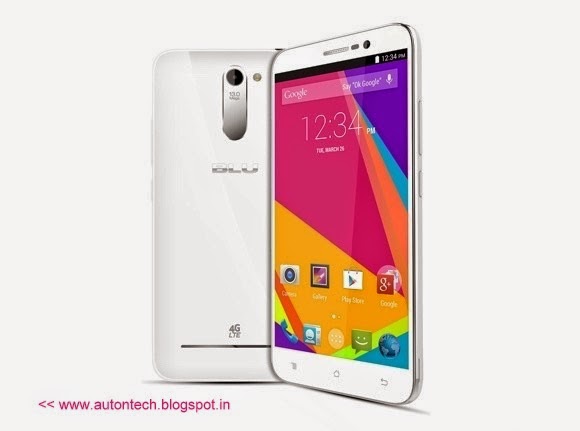
BLU outs a trio of affordable Studio smartphones with LTE

A week after the release of Studio 7.0, BLU launched a trio of affordable Studio smartphones with LTE connectivity. BLU Studio 6.0 LTE, Studio 5.0 HD LTE, and Studio Mini LTE are currently available to order contract-free on Amazon for $279, $199, and $119 respectively.

As its price tag suggests, the BLU Studio 6.0 LTE is the most capable device from the bunch. It packs Qualcomm 8928 Snapdragon 400 SoC with 1.6GHz quad-core CPU, 2GB of RAM, 16GB of expandable memory, 13MP main camera, and 5MP front-facing unit. The OS on board is Android 4.4 KitKat.
Physical measures of BLU Studio 6.0 LTE are 163.5 x 81.4 x 9.15 mm. The handset packs 3,200mAh battery.

BLU Studio 5.0 HD LTE features Qualcomm 8926 Snapdragon 400 SoC with 1.2GHz quad-core CPU and a gig of RAM. The rest of the device’s specs include 5” 720p display, 8GB of expandable memory, 13MP main camera, 5MP front-facing unit, and Android 4.4 KitKat.

Measures of BLU Studio 5.0 HD LTE are 145.7 x 72 x 9 mm. The handset is powered by a 2,200mAh battery.

BLU Studio Mini LTE  is the most affordable member of the trio. It offers Qualcomm 8926 Snapdragon 400 chipset with 1.2GHz quad-core CPU and 1GB of RAM.

A 4.5” display with 854 x 480 pixels, 5MP main camera, 0.3MP front-facing unit, and 4GB of expandable memory are also on board. The device boots the seriously old Android 4.2.2 Jelly Bean out of the box.
BLU Studio Mini LTE measures 137.1 x 67.4 x 10 mm. It is powered by a 1,850mAh battery.

Tuesday, 23 December 2014

Xiaomi Redmi Note 4G goes on sale in India on Dec.30

Last month, Xiaomi announced that both the Redmi Note and the Redmi Note 4G would be headed to India before the end of the year. Yet while the 3G-only model has been a flash sale star already, the same can't be said for its 4G-capable sibling.

Now though, the Chinese smartphone maker has thankfully unveiled the release date for the Redmi Note 4G in India. It's December 30, which is next Tuesday.

As it's always done in the subcontinent, Xiaomi will be using Flipkart, the biggest online retailer over there, to handle its flash sale. This will start at 2 PM. At the same time, however, you'll be able to purchase a Redmi Note 4G from select stores belonging to Indian carrier Airtel.
The Redmi Note 4G is priced at INR 9,999, which equates to approximately $157 or €129. It comes with a 5.5-inch 720p touchscreen, a 13 MP rear camera with LED flash, a 5 MP front snapper, 2GB of RAM, and 8GB of expandable internal storage.

A Qualcomm Snapdragon 400 SoC is running the show, and it sports a 1.6 GHz quad-core Cortex-A7 processor. The phone's also got a 3,100 mAh battery, and it only takes one SIM card (unlike the 3G version which is dual-SIM).